
An AI agent went from a leaked GitHub secret to a Key Vault in five minutes
Microsoft Threat Intelligence reports attackers using an agentic AI framework to search GitHub for exposed secrets and act on them, in one case reaching an Azure Key Vault five minutes after the search began. What happened, and what to rotate.
What we know as of November 10, 2026, from Microsoft Threat Intelligence's report of November 5, 2026. Figures are theirs.
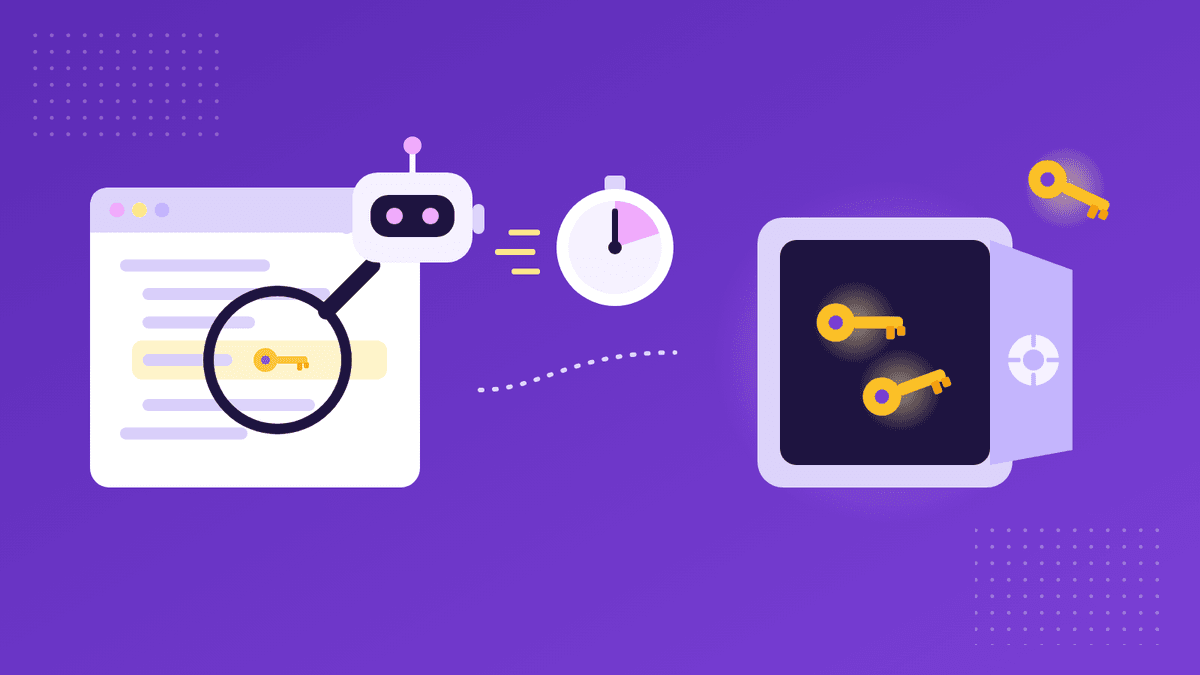
Searching public code for leaked keys is one of the oldest tricks in cloud intrusion. What has changed, according to Microsoft Threat Intelligence, is who does the searching. In a report published on November 5, Microsoft describes threat actors using an agentic AI offensive framework called ARTEX to query GitHub for exposed secrets, judge what they find, and act on it with little human involvement. In one case Microsoft observed, an AI agent went from searching GitHub for an application's client secret to taking data out of the organization's Azure Key Vault in five minutes.
What did Microsoft observe?
Microsoft says that from August 2026 it saw the framework submit large volumes of searches to GitHub. The queries often combined the name of a target organization with keywords for secrets, for a cloud service or for an AI provider. Microsoft notes that this kind of search has historically been limited by the time it takes a human to find repositories, read them and work out what a credential opens. ARTEX hands that work to agents, which scan faster and also carry out the follow-on steps.
The follow-on steps are where the report gets specific. From as early as October 28, Microsoft observed service principal sign-ins using valid leaked or stolen application credentials, succeeding against dozens of applications across multiple Microsoft Entra ID tenants. In some cases a multitenant application's credential was compromised at its source, the vendor that owns the application, and then used to reach several downstream customer tenants. Once signed in, the agents went after operations that return more credentials: storage account keys, App Service settings, connection strings, publishing credentials and Kubernetes user credentials. Microsoft reports file downloads from SharePoint and OneDrive, access to mailbox items, searches through Microsoft Graph, secrets taken from Key Vault, searches of Azure DevOps for further secrets, and use of the Run Command feature to run scripts on virtual machines. The agents showed a particular interest in credentials for AI services, including API keys for major AI providers.
One detail shows why "machine speed" is more than a figure of speech. When the agent's cloud API calls failed because it had used the wrong API version, it retried with a corrected version and succeeded within roughly 28 to 80 seconds, according to Microsoft. That is the kind of troubleshooting a human operator would do, compressed into about a minute.
Why doesn't deleting the leaked secret fix it?
Because the secret was never the file it sat in. Microsoft is direct on this point: publicly exposed credentials remain usable until they are revoked or rotated, and removing the original disclosure does not remediate the exposure. Its mitigation guidance adds that removing the content doesn't eliminate copies retained in edit history, caches, archives, logs or other systems, and that organizations finding their secrets in public repositories must assume the secrets and the applications behind them are compromised.
The same applies one step further along. For an affected application, Microsoft advises removing all of its client secrets, certificates and federated credentials, including any the attacker may have added, and notes that tokens already issued stay valid until they expire. It also advises rotating everything stored in any Key Vault the application could read, and any credentials found in documents the attacker accessed. A single leaked client secret, in other words, can turn into a long list of rotations, because it opened a place where other secrets were kept.
What should teams do now?
If your organization has ever had a credential in a public repository, Microsoft's guidance comes down to a short sequence:
- Scan your repositories for secrets, and treat anything found in a public repository as compromised, even if the commit was later deleted.
- Revoke or rotate those credentials, then rotate whatever they could read, including secrets in the vaults the affected application could reach.
- Review sign-in and audit logs for the affected applications. Microsoft points to Entra sign-in errors AADSTS7000215 (invalid secret) and AADSTS7000222 (expired secret) as signs that someone holds a credential for your app, and says a failure followed by a success is urgent.
Longer term, Microsoft recommends moving applications away from secret-based authentication towards managed identities where possible, limiting what each service principal can do, setting a maximum lifetime for application secrets, and turning on secret scanning and push protection. For managed service providers, Microsoft adds reviewing partner access to customer tenants and notifying affected customers under existing agreements.
How do secrets end up in public code?
Microsoft's explanation is unglamorous: developers put secrets in configuration files, scripts and other code to get an application working quickly, or to avoid setting up a more modern authentication flow. Much of that is a delivery problem. A secret has to get from the person who created it to the person or system that needs it, and a committed file is the path of least resistance, especially when a colleague is waiting.
Two habits close much of that gap. The first is to stop using long-lived shared secrets where the platform offers an identity instead, which is exactly what Microsoft recommends. The second, for the secrets that remain, is to hand them over through a channel that doesn't keep a copy: an encrypted link that expires after one view, rather than a file in a repository or a message in a chat history. Our guides to sharing .env files with a team and sharing an API key securely walk through both, including how to rotate a key without breaking what depends on it. If you use CredenShare for that handoff, note that shares created from the Slack app are encrypted on CredenShare's servers rather than in your browser.
What the ARTEX report changes is the time available. A secret pushed to a public repository by mistake used to sit there until someone happened to look. Microsoft's observations suggest the search is increasingly automated and the follow-up can take minutes, so rotation has to start as soon as the leak is found.
Sources (checked on November 10, 2026):
Microsoft Threat Intelligence: Threat actors use agentic AI tooling to find and abuse exposed secrets (November 5, 2026)
Product names are trademarks of their respective owners. CredenShare is not affiliated with them.
Hand secrets over in a link that expires, not a commit
Free plan: 3 shares a day, encrypted in your browser.
Written by
CredenShare
The CredenShare team writes about secure credential sharing, password management, and enterprise security best practices.