
wfx-loot: hijacked GitHub accounts pushed a CI secret stealer
Aikido Security tracked stolen GitHub accounts pushing a credential-stealing workflow into tens of thousands of repositories, then deleting the run logs. How the payload worked, how it outlasts key rotation, and what affected teams should check.
What we know as of November 12, 2026, from Aikido Security's report of November 12, 2026. Figures are theirs.
A CI pipeline is one of the busiest meeting points for secrets in any software team. Cloud roles, registry tokens, deploy keys and AI provider keys all get handed to the workflow so it can do its job, and anyone who can change that workflow can, in principle, ask it to hand them over. Aikido Security's write-up of a campaign it calls wfx-loot shows that idea carried out at scale. According to Aikido, starting on November 10 an attacker used stolen GitHub credentials from 4,837 accounts to open probe pull requests in 61,764 repositories, and the researchers found signs that the payload ran in at least 1,806 of them (another figure in the report puts the number with credentials taken at 1,835). Aikido cautions that these counts may understate the impact.
What makes the report worth reading is less the size than the method. The attacker did not need a vulnerability in GitHub or in any package. They needed accounts that could already write to repositories, and the secrets those repositories' workflows were trusted with.
How did the attack work?
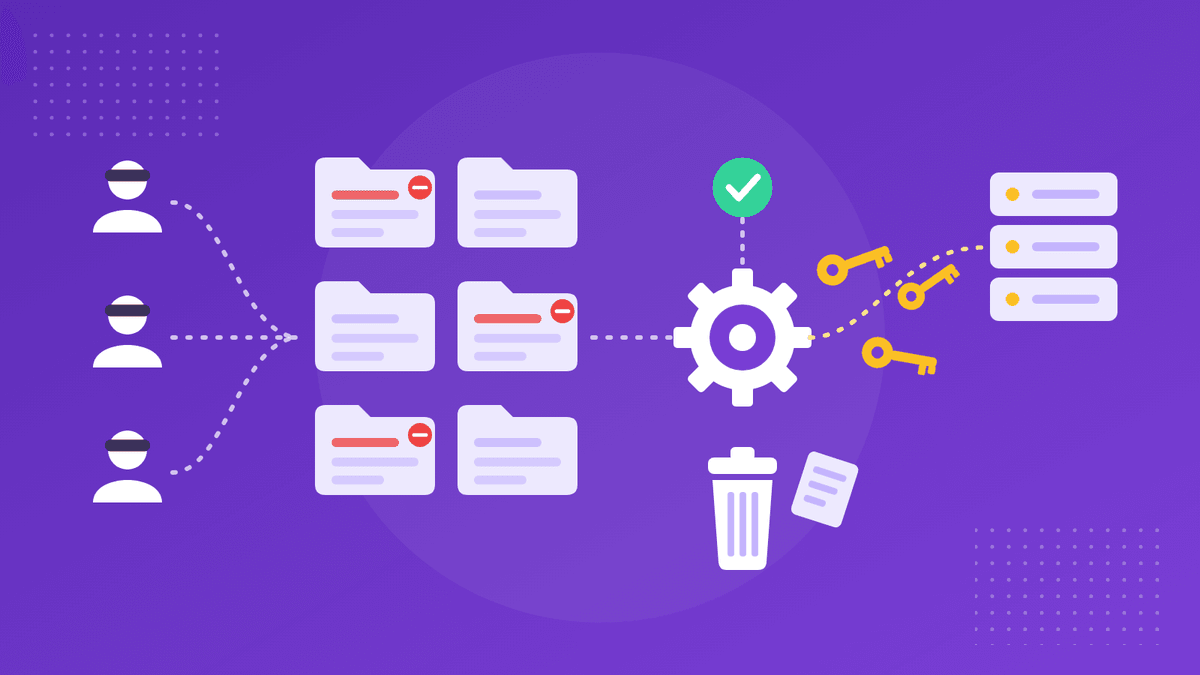
Aikido describes a three-step routine repeated for each repository a stolen token could write to. First comes a probe: a pull request titled "docs: dependency audit notes" from a branch named wfx-docs, which confirms write access. Then the payload is pushed in one of three forms, either about 1,500 lines injected into an existing workflow under the commit message "ci: refresh build cache", a hidden script wired to an npm postinstall hook, or a new workflow file on a short-lived branch named chore/ followed by eight random characters. Finally, the attacker reverts the change within about a minute and deletes the workflow run along with its logs. Aikido says a missing run number in a workflow's history is often the only trace left behind.
According to the report, 10,431 of the probe pull requests went into repositories the account did not own, reached through collaborator or organisation access, and 92% of them were still open when Aikido published, which the researchers read as a sign that most owners had not noticed. The payload also reached at least one Packagist package and one Go module through automated publishing triggers, though Aikido assesses that the attacker was after CI secrets rather than trying to spread through the supply chain.
What did the payload take?
Aikido describes the payload as a single shell script, heavily commented and not obfuscated, that works in four stages: collect, escalate, persist and exfiltrate. The collection list in the report is broad. It includes the workflow's secrets and variables, the GITHUB_TOKEN and OIDC tokens, the full runtime environment, credential files for the major clouds, Docker, Kubernetes, npm, PyPI, SSH and Terraform, keys for AI providers and AI coding tools, shell histories, and every .env, .pem and kubeconfig file under the home directory. On self-hosted runners it also goes after cloud instance metadata credentials.
The escalation and persistence stages are what turn a stolen secret into lasting access. Aikido reports that the script exchanges GitHub OIDC tokens for AWS, Google Cloud and Azure sessions, creates long-lived AWS access keys for IAM users it can reach, and impersonates Google Cloud service accounts. To outlast credential rotation, it can rewrite an AWS role's trust policy so that any AWS account may assume it, and add federated identity credentials to Azure applications that point back to the compromised repository. It also posts forged "success" status checks using the names of a repository's required checks; Aikido notes that branch protection matches on the check's name rather than on the app that posted it, so the forged checks can clear merge gates while the payload is still running.
In this campaign, Aikido says, the payload was configured to send its haul by HTTP POST to one of two callback servers listed in the report's indicators.
What should affected teams do?
Aikido's advice is blunt: if the payload ran in your repository, assume every secret and cloud role available to its workflows is compromised. The report lists what to look for in any repository you can write to, from November 10 onward: a wfx-docs branch or a pull request titled "docs: dependency audit notes", commits titled "ci: refresh build cache", "chore: add ci helper" or "chore: add dependency audit workflow", and short-lived chore/ branches. Aikido adds that if the probe ran, the account that opened it is compromised even if the workflow stage did not run, and that finding no leftover artifacts or cache entries does not mean nothing was taken, because the run itself was usually deleted.
Because of the persistence steps, rotating keys is only part of the cleanup. Given the persistence steps Aikido describes, affected teams have three more places to look: review AWS role trust policies for a wildcard principal, look for unexpected federated identity credentials on Azure applications (Aikido says the attacker's were named starting with wfx-ci-), and revoke any IAM access keys created during the window. The GitHub account that pushed the change needs its tokens and sessions revoked as well, since the whole campaign started from stolen GitHub credentials.
Aikido also reports an overlap with an October campaign it calls GhostAction: accounts hit then were significantly more likely to be hit again, though the researchers assess the two as distinct operations, noting that stolen credentials often pass through several hands. We wrote about a separate October abuse of stolen GitHub tokens that followed the same basic logic.
What is the wider lesson?
The pattern is that a secret's exposure is set by everyone and everything that can reach it, not by where it was first stored. A deploy key placed in a repository's Actions secrets is available to any workflow that repository runs, which means it is available to any account that can push a workflow change. Short-lived, narrowly scoped credentials, OIDC roles whose trust policies are restricted to specific branches and environments, and required reviews on changes to workflow files all reduce how much one stolen account can reach.
The same reasoning applies to the way secrets move between people. Every place a key has been pasted, whether a chat thread, a ticket or a shared note, is one more place a stolen account can search later. When you do need to hand someone a replacement key after rotating, an encrypted link that expires after it is read leaves less behind than a message that sits in history. CredenShare encrypts shares created in the web app in your browser; shares created from Slack are encrypted on CredenShare's servers. Our guide to sharing .env files covers the same idea for whole configuration files.
Sources (checked on November 12, 2026):
Aikido Security: wfx-loot campaign pushes CI secret stealer to tens of thousands of repositories (November 12, 2026)
Product names are trademarks of their respective owners. CredenShare is not affiliated with them.
Hand rotated keys over in a link that expires
Free plan: 3 shares a day, encrypted in your browser.
Written by
CredenShare
The CredenShare team writes about secure credential sharing, password management, and enterprise security best practices.